
A public safety BDA is a life safety system, and Florida’s Code treats it like one. The same way a fire alarm must be monitored and inspected on a schedule, most Florida jurisdictions require BDAs to be inspected annually, kept under a service agreement, and recertified with current documentation on file. This page covers the ongoing side of compliance: what is required, what gets buildings flagged, and how to make the annual cycle uneventful.
Inspection versus testing
The two work together and are often confused. Testing is the measurement: the grid scan that proves radio coverage meets the threshold. Inspection is the compliance check: the fire inspector’s verification, usually during the building’s annual fire inspection, that the system is present, functioning, maintained, and documented. A building can be flagged at inspection without any coverage failure at all, simply because the required recertification paperwork is not on file.
What the annual requirements look like
Across most of Florida, the written requirements for an existing BDA come down to three things:
- An annual service agreement. The Code in most jurisdictions requires these systems to be under ongoing professional maintenance, and some authorities, including in the Miami FL region, will not issue final sign-off on a new system until the support contract exists.
- An annual inspection, typically folded into the building’s fire inspection.
- Annual recertification: an updated coverage scan and the associated paperwork filed to show the system still performs. In most areas this is the scan plus documentation, nothing more exotic, although documentation requirements can be extensive in some AHJs and can affect recertification costs.
Enforcement intensity varies from County to County, from aggressive to occasional. The obligation exists either way, and buildings that treat it as optional are the ones that end up in our What Happens Next guide.
What gets buildings flagged
From our service files, the recurring reasons an inspected building fails:
- Recertification documents not on file, the pure paperwork failure.
- Active alarms on the BDA or through the fire alarm panel it connects to.
- Physical damage: cables cut and antennas broken by contractors working in the building, equipment unplugged and never reconnected.
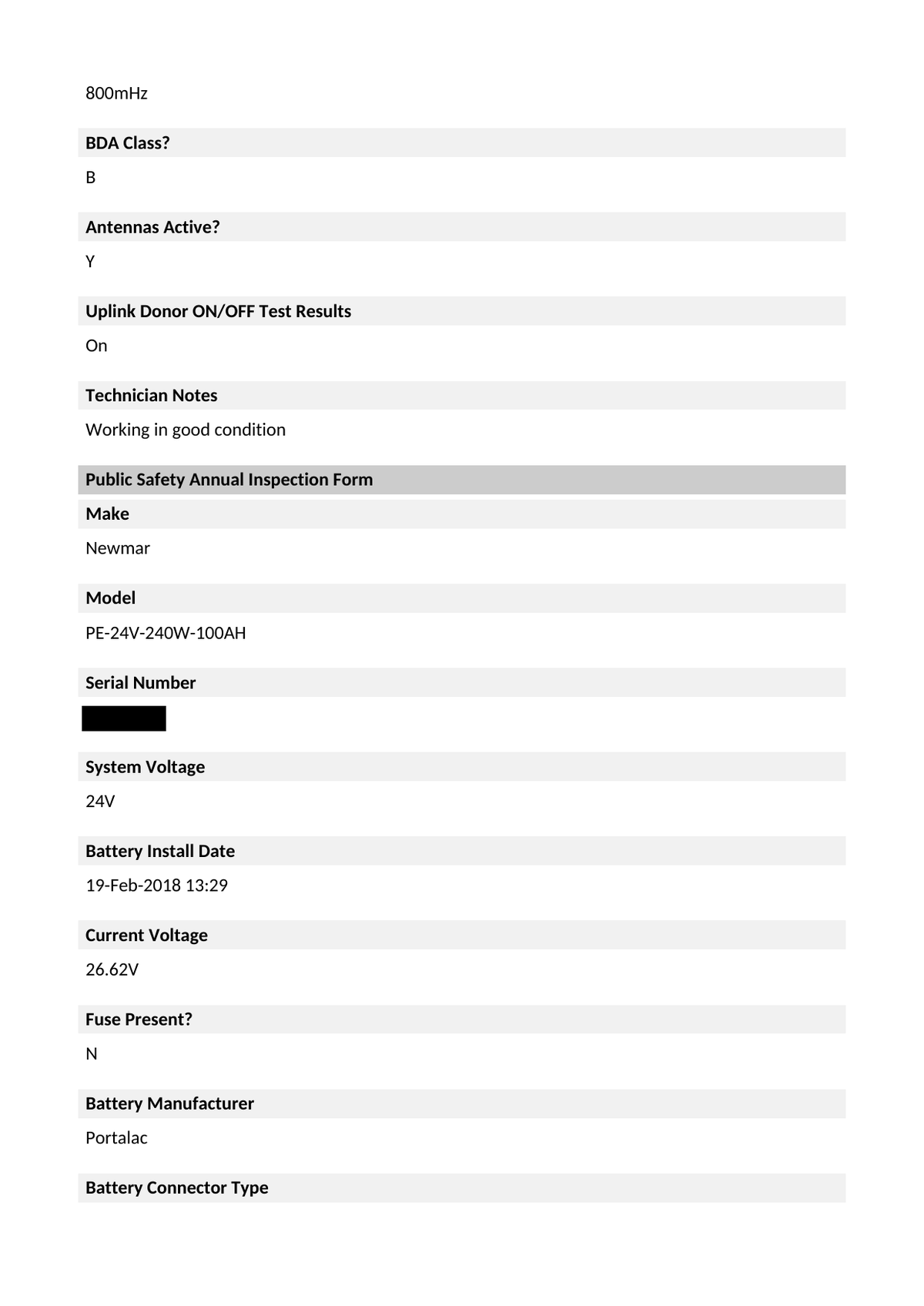
- Power and protection failures: surges, blown fuses, dead batteries, sometimes years old and undiscovered.
- Coverage that has degraded because the environment changed, new construction nearby or renovations inside.
What inspectors and authorities expect to see
A properly functioning system with no active errors or faults, a current service agreement in place with a qualified BDA firm, current recertification on file, and an owner who can produce all three without a scramble. Buildings that maintain those four things pass their inspections without drama, year after year. It is genuinely that unexciting, which is the point.
Making the annual cycle uneventful
The pattern in our files is consistent: monitored, maintained systems do not appear on violation lists. The buildings that get flagged are almost always the ones where nobody owned the annual cycle. A service agreement puts the cycle on someone’s calendar professionally: the inspection readiness, the recertification scan, the paperwork, and the necessary repairs before they become failures or quickly thereafter. If your building has a BDA and no current support agreement, that is the gap to close first. Signal Communications is here for you.
Frequently Asked Questions
In most Florida jurisdictions, yes, alongside a service agreement and annual recertification. Local enforcement varies; the written requirement is the norm across the state.
You receive a notice with a deadline, and the path depends on why it failed: paperwork, repair, or coverage. Our guide What Happens Next walks through each path.
The building should hold its own file, and your service provider should maintain copies. At inspection time, what matters is being able to produce them. Many AHJs require this paperwork to be stored at the BDA location.
Yes. Acceptance testing proves the system at installation, and the annual cycle begins from there. In some jurisdictions the support agreement must be in place before final sign-off.